Thursday, May 19, 2016

Are Americans Overtaxed

Taxation is an admittedly difficult subject to broach, especially when considering the varying aspects of taxation that appear to the average American. There is income tax, sales tax, property tax, capital gains tax, payroll taxes, and occupational tax. With all of these taxes, creating a completely comprehensive tax profile for an average person would require years of schooling and an intricate knowledge of the American tax system. As a result, this post will only be able to go in depth about a few subjects, such as federal income tax and capital gains taxes. The other taxes very so heavily between states and occupation that attempting to describe all of them would be impossible.

First and foremost, federal income taxes need to be approached. Every person in the country pays some form of federal income tax ranging from 10% for the lowest earners, to 39.2% for the highest earners in the country. The manner of taxation is not that simple however. If someone makes $500,000 a year, they don't pay 39.2% taxes on all of that money. Instead they pay 10% for a portion of that money, then a portion at 15%, and so on and so forth until they reach the highest tax bracket. For a single filer, incomes of  $415,000 and higher are taxed at 39.2%, meaning that every dollar over $415,000 is taxed at the highest rate, but none of the cash flow below that.

As far as capital gains taxes are concerned, they are structured differently as long as the return on investment is larger than a one year time period. If the period on the investment is shorter than one year, than the income made on that investment is taxed at the tax bracket that all the other income of the specific individual. If the investment is longer than a year, the taxes are lowered, with members in the lowest tax bracket paying no taxes on investment and members in the highest tax bracket paying only 20% as opposed to 39.2%. Another interesting angle about capital gains tax is that money made through investments are effectively attacked twice. The money is first taxed at the corporate tax rate, usually 32% when the company receives income for the service that they render. Once the money is taxed at the corporate level, the money is then split and given to the share holders in the form of dividends, which is taxed at the capital gains tax level, an interesting means of taxation.
Figure 2 - Taxes by Source as a Share of Total Tax Revenue
These are all taxation records based on the current year, but a past model and taxation rates around the world are also necessary for a proper consideration of the question; are Americans overtaxed? In 1960, the average american made about $44,000, adjusted for inflation of course. Today, most Americans make around $52,000 which is a good step more. Tax rates were also quite different in 1960, with the average American income being taxed at about 25% compared to 22% nowadays. This difference is not nearly as big as the difference between the high income earners. In 1960, someone who made 1.5 million dollars paid 91% income tax on that money, whereas nowadays they only pay about 40%. This is a huge decrease in just 50 years, but despite this, the government has managed to maintain about the same income levels from taxes.

Finally, tax rates globally play a huge role in the American tax policy. As far as America goes, it has the third lowest tax rate in the OECD (Organization for Economic Cooperation), which has some of the most powerful economies in the world in its folds. Despite having the third lowest tax rate, it has the fourth highest income tax rate, which seems rather curious. This huge gap is due to value added tax, which taxes corporations on the increased value of goods should they refine them, like crude oil being refined into petroleum. America has no value added tax, the only country in the OECD to not implement one. For that reason alone, Americans could be seen as missing out on a tax burden that many others face.

All in all taxes are an incredibly complicated and difficult topic. Just trying to explain how they work is quite the hassle, but I've done the best I can. The previous information is all I can offer when wondering are Americans overtaxed?

Sources/links: http://www.schwab.com/public/schwab/nn/articles/Taxes-Whats-New

Wednesday, May 4, 2016

Unit 4 Judiciary-The Supreme Court Gets Ready to Legalize Corruption

The article written by Jeffrey Toobin reflects on the possibility of another hit to campaign and finance reform worse than Citizens United that could make corruption legal, at least corruption by a different name. The article talks about the Supreme Court hearing a case from former Virginia governor Bob McDonnell amidst charges of corruption and bribery. A Richmond business man gave over 100,000 dollars to the governor and his wife in the guise of campaign contributions, and although the decision has not yet been made, it looks as though Governor McDonnell will likely get off without charges. The lawyer for McDonnell argues that bribery and corruption only apply if the governor acted on these contributions in a formal way, which according to the lawyer, he did not. Finally the article goes on to say how the deregulation of corruption is all but here. Image result for supreme courtImage result for supreme court

This article reflects the the Judicial portion of Unit 4 well due to the fact that it revolves around the workings of Article III judges and the highest court in America. The judges are using the precedent set forth by the Citizens United case in order to allow Governor McDonnell the ability to petition the court. It seems to me that standing contributions to any politician is corruption, no matter what the purpose. While Citizens United let anyone get someone elected, paying them in office seems to be going over the limit, even that politician doesn’t act “formally” on the payments. The courts are not really using judicial review because there is no law which they are declaring unconstitutional. It seems as though they are attempting to be judicial activists and are ignoring the doctrine of the political question. The Supreme Court should not have to rule on a case that could make buying a politician legal. No matter what the justices decide, it will not be a unanimous decision.

Link to Articlehttp://www.newyorker.com/news/daily-comment/the-supreme-court-gets-ready-to-legalize-corruption:

Sunday, April 17, 2016

Bureaucracy Unit 4: Washington's Bureaucracy Strikes Again

The article, titled "Washington's Bureaucracy Strikes Again", is all about new regulations put forth by Obama administration recently regarding such hot issues as tax reform and the tax code. According to the article, the Treasury Department has instituted regulations that make it harder for businesses that have over seas sectors to avoid double taxation on the federal level. Along with that, the Department of Labor issued 1,000 pages of new and intense regulations called the "fiduciary rule", supposedly targeting the investment industry which will make saving for the future for both lower and middle class citizens even harder. The author then goes in to talk about how it is not the place of bureaucracies to make these decisions without the consent of the Legislative branch, and believes that it is an egregious misstep by the executive branch over matters concerning taxation.
Portrait of Sen. Mike Lee
This article pertains to the current unit because it focuses heavily on the power that bureaucracies wield, and the possible misuse of that power. Bureaucracies are old and incredibly powerful institutions in the American government, and the article points out just how far their influence reaches. Despite having discretionary authority, the right of taxation goes solely to Congress, even though they gave the Department of the Treasury the right to fix the tax law. However, the red tape that came out of bureaucracies instead came from the Department of Labor, something that could be viewed as an overstep of the power of the executive branch. A bureaucrat in today's society holds more power than ever before, even if Congress has given them the power of independent regulatory agencies. Bureaucracies are beginning to overstep, and that is something to fear.Link:http://dailysignal.com/2016/04/11/washingtons-bureaucracy-strikes-again/

Thursday, March 31, 2016

Presidential Unit 4: Why President Obama Picked The 'Only White Guy' On His Shortlist- March 31

The article mainly focuses on President Obama’s recent decision to nominate judge Merrick Garland to the Supreme Court of the United States. It talks about the tough road that judge Garland faces in the near future as the members of the Senate tear apart both his life and the lives of his family in a hope to find something to stop his nomination. The article also addresses the apparent inability of the President to appoint someone due to the fact that he is in his last year and seemingly a lame duck president. Being an interview, the article also goes over Obama’s personal opinions on the matter, the interviewing of the candidate to see if he (or she) is fit for the job, and the consequences of refusal. According to the interview, should the Senate refuse to select Garland, a new precedent would be set in which justices could only be confirmed with same party Senates. President Obama is interviewed about his Supreme Court nominee, Judge Merrick Garland.
This article is perfect for the Presidential section of unit 4 as it deals with one of the powers specifically given to the POTUS in the Constitution, the power to appoint judges and ambassadors. The fact that this particular judge is so highly contested fits perfectly with the political spectrum of today’s world. The Republican party is losing ground in the federal government, and they are doing everything in their power to prevent the Democrats from taking any of it back. This article focuses heavily on the efforts on the part of the Republicans and that pertains heavily to Congress’s right to the confirmation process, whereby they decide whether or not the appointee is allowed to be confirmed. Also due to today’s political atmosphere, the President can no longer make recess appointments, making this attempted appointment all the more contested. If the President can no longer get appointees through the Senate when they are of the opposite party, it will represent a paradigm shift like none we’ve seen in the modern world. Judges will stop being largely nonpartisan, and more and more the judiciary system will become just as split as the rest of the government. Luckily, the fourth branch of government, or the media, has a lot to say on the matter of the appointment, and hopefully we will have a 9th justice to end these ties. Link to Article:http://www.npr.org/2016/03/18/470918125/obama-refusal-to-consider-nominee-damages-publics-faith-in-the-judiciary
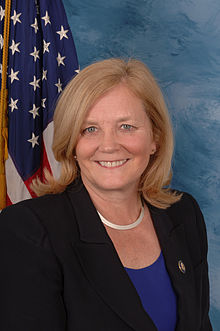
Thursday, March 17, 2016

Dem. Chellie Pingree-Representative from Maine’s 1st District


Dem. Chellie Pingree-Representative from Maine’s 1st 
District  (Unit 4)
Representative Pingree has served in government since 1992 when she was first elected to the Maine Senate defeating a Republican incumbent. She was reelected in 1994 and 1996. She was forced to leave the State legislature in 2000 due to term limits.She first ran for House in 2008 with sponsorship from EMILY’s list, several labor organizations, and Congressman Rush D. Holt Jr. Some of her largest campaign contributors are the American Federation of teachers, Corning incorporated employees PAC, Machinists Non Partisan Political League, and Synergy PAC, all with $5,000 dollars worth of investments. Her district is the south of Maine, comprising areas such as Portland and Augusta, along with their outlying regions. In a state as sparse as Maine, those big cities are easily offset by the outlying territory, making it largely suburban. She has served consecutively since 2008, making 2016 her fifth term if she is reelected. She currently serves on the Committee of Appropriations, and has sponsored such bills as, the Food Recovery Act of 2015, the Asylum Seeker Work Authorization Act of 2015, and the Ruth Moore Act of 2015. She served in the Maine state legislator as Majority leader from 1996 to 2000.
Bill 1: While she does not largely care about privacy issues, she is for protecting the consumer, so Representative Pingree would most likely vote for this bill. This bill is all about protecting the average consumer against big government and business, and she is incredibly for the protection of the little guy.
Bill 2: She would likely vote against this bill because she is pro labor union, an institution that would likely be hurt should air traffic control become privatized. This bill is against big government and for increased privatization which is against her particular stances.
Bill 3: Representative Pingree does not have much say in prison debates, but it is likely she would vote yes for this because she has voted bi-partisan in the past and cares about personal liberties for the average man, which this bill would help.

Tuesday, March 1, 2016

Unit 3: Sick Of Political Parties, Unaffiliated Voters Are Changing Politics

The article Sick Of Political Parties, Unaffiliated Voters Are Changing Politics talks about the growing movement towards waning affiliation in the United States political spectrum. Many voters in Colorado, the majority in fact, are now registered Independent as opposed to the other two major parties. 39% of American voters are registered as Independent, higher than both Democrats, at 32%, and Republican, at 23%. In Florida, 44% of Hispanics are now independents, compared to 34% registered Democrat and 13% registered Republican. This makes Florida an even more hotly contested swing state due to the huge number of independent voters throughout the state. Lastly, in Arizona, Independents are attempting to band together in order to protest the lack of ability to vote in primaries and caucuses, and the fact that Independents are looked at as seemingly second class citizens. U.S. Party Identification, Yearly Averages, 1988-2014A voter marks a ballot for the New Hampshire primary Feb. 9 inside a voting booth at a polling place in Manchester, N.H.
The article pertains heavily to Unit 3 because a huge part of unit 3 is political parties. While not technically a political party, Independents play an enormous role in getting one of the two parties elected to the White House, and possibly destroying the two party system. The growing number of Independents is worrisome to both parties because they now have to impress not only their party, but also the steadily growing number of Independents. More and more, Independents are able to influence the way elections are swinging, something that is huge for the upcoming 2016 election. There is a huge party de-alignment within the younger voter base. Political parties are losing a great deal of traction with not only minority groups, but also the younger portion of the country to due a political disconnect. The future of the country is no longer in the hands of just the parties, but the ever increasing number of Independents. It will be interesting to see how this affects future elections, including the introduction of independent candidates.

Link to the Article: http://www.npr.org/2016/02/28/467961962/sick-of-political-parties-unaffiliated-voters-are-changing-politics

Sunday, February 21, 2016

Unit 2: Something better than polls for political predictions? You bet!

According to an article put out by PBS, there is a new, more advanced way to tell who will win the presidential election that is better than polls. Using a website called Predictit and poll data, a new marketplace for determining the president has been created. On this website polling data and political analyses are put together and allow users to “invest” in specific candidates based on that information. David Rothschild attributes the success of political investments to the fact that putting your money where your mouth is causes more political focus. By actually betting on who will win the election with real money, you put more than just your opinion on the line. Those who invest are more likely to actually research the issues and thus further the democratic process.
I believe that this means of predicting who will win the presidency is a more effective means than merely polling. When you poll, you are only asking who people think will win right here and now, whereas investing real money not only sparks capitalism, but makes people look towards the future. This relates heavily to unit 2 because it talks heavily about how polls can be used and how accurate they are. This is a more effective means because it has also been shown in inspire higher voting rates, because money speaks louder than anything. The cost is also relatively low, so no one has to worry about deep debt. Using the free market to determine public opinion is the American way, as we have always been about making money. Making someone invest in a candidate also eliminates people who a falsely inflating someone’s ratings, as they have to put real money in, which further helps the accuracy. I see free market polling as the new American Political culture, with those of both extreme and moderate political views able to express their thoughts. Polls have to be scientific, random, and non leading to be accurate, which this method completely eliminates, making it easier on not just the person administering the site, but the users as well. Finally, this site mirrors the political values of many, who view money as the big determining factor of victory.
Image result for trump
Link: http://www.pbs.org/newshour/bb/something-better-than-polls-for-political-predictions-you-bet/

Wednesday, February 10, 2016

Paris Climate Accord Under Attack

According to an article put out by the New York Times, the Supreme Court has recently halted President Obama's climate change regulation. This could cause the already tentative global warming accord, signed in Paris less than two months ago, to crumble completely. Historically speaking, the United States has been the largest contributor of greenhouse gases, although China and India have recently caught up. If America fails to follow through on their end of the climate deal, China and India may also default on their promises. However, the climate change regulation has not been permanently stopped, only temporarily, as the Supreme Court ways the legal issues behind the matter. 

This article shows that even the best of plans, with the purest intentions, do not always go as planned. While this may not seem like a very fair thing to do, it is the right of the Supreme Court, under checks and balances, to make sure everything that the President does is legal. Without these separation of powers, the President would be able to make all of the key decisions, and no one could stop him. This applies greatly to what we are talking about, as without the Constitution and Constitutionalism, the Supreme Court would have no right to check the executive's power. The Supreme Court has the right to test the Constitutionality of a measure, even if that measure may be for the greater good of not just humanity, but the Earth as well. 

Link to the Article: http://www.nytimes.com/2016/02/11/us/politics/carbon-emissions-paris-climate-accord.html

Tuesday, February 9, 2016

John Marshall: The Father of the Supreme Court

John Marshall was born in Virginia on September 24, 1755, the oldest of fifteen siblings, eight sisters, and six brothers. Although his family was rather large, and several of his cousins lived with him through his childhood, he never wanted for anything, as his father, Thomas Marshall, was a land surveyor for Lord Fairfax. He was well educated by not only his father, but from an ordained Christian Minister, and an academy in a Washington parish as well. By the time he served in the American Revolutionary War, Marshall had read the works of Livy, Horace, Shakespeare, and Alexander Pope, along with being well versed in Latin as well. He served in the Continental Army as a Captain of the Eleventh Virginia Continental Regiment from 1776 to 1780. Soon after his service in the war, in 1782, John Marshall began his career in politics.
From 1782 to 1789 John Marshall served as a member of the Virginia House of Delegates, and was one of the main forces behind getting the Constitution passed in Virginia. Not long after getting it passed, Marshall decided that he aligned more with the Federalist party, the enemies of Jefferson’s Democratic Republicans. All while participating in politics, John Marshall’s personal law firm flourished, with his first appearance before the Supreme Court, something that he would dominate in the not too distant future, coming as a result of the Ware v. Hylton case. He was offered the position of Attorney General under George Washington, which he declined. He was also offered the position of Minister to France, another title he also declined. He did however accept to be part of the three man team that would become part of the XYZ Affair, which decreased public sentiment towards France even further. Not long after, Marshall ran for the House of Representatives, winning the seat with the help of Patrick Henry and his popularity through handling the XYZ Affair. In 1800 Marshall was appointed John Adams’ Secretary of State, foreshadowing his eventual rise to Supreme Court Justice.


Following John Adams’ defeat in the election of 1800, the Federalist party sought to maintain some presence in national politics, as the Executive and Legislative branches had both been won by the Democratic Republicans, so Adams nominated Marshall to the position of Chief Justice of the Supreme Court. He was officially confirmed to the Supreme Court in January 1801, and started his tenure as Chief Justice in February, although he maintained his Secretary of State status for another month, making him both a cabinet member and Justice. Using his powerful personality and leadership skills, Marshall was able to shape the way the Supreme Court acts to this day. He changed the way the Supreme Court announced decisions, going from every Justice writing their own decision, to one single decision capturing the entirety of the case. This allowed John Marshall to enforce his will and become the spokesman for the Supreme Court. Not only did he change how decisions were made, he made it so Supreme Court Justices wore simple black robes with no powdered wigs, instead of the fancy robes that Justices in England wore.

As the longest serving Supreme Court Chief Justice in American history, Marshall was able to use his Federalist views to influence the Federal government long after the Federalist party had died off. He participated in over 1000 decisions, writing over 500 of them himself, and was only on the losing side of constitutional case once, in Ogden v. Saunders. He was the main force behind Marbury v. Madison, the case that decided Judicial Review, McCulloch v. Maryland, which allowed for a Federal Bank, and Gibbons v. Ogden, which allowed Congress to regulate interstate commerce. His work behind the Supreme Court established it as a powerful third of the United States government, where before it had lagged behind. John Marshall set a precedent that would be followed for generations to come, and almost single-handedly established judicial review, something we now take for granted.


For more information, check out this video: https://www.youtube.com/watch?v=1-lMadHIfYE
Sources: http://www.biography.com/people/john-marshall-9400148#mcculloch-v-maryland
http://www.let.rug.nl/usa/biographies/john-marshall/