The article mainly focuses on President Obama’s recent decision to nominate judge Merrick Garland to the Supreme Court of the United States. It talks about the tough road that judge Garland faces in the near future as the members of the Senate tear apart both his life and the lives of his family in a hope to find something to stop his nomination. The article also addresses the apparent inability of the President to appoint someone due to the fact that he is in his last year and seemingly a lame duck president. Being an interview, the article also goes over Obama’s personal opinions on the matter, the interviewing of the candidate to see if he (or she) is fit for the job, and the consequences of refusal. According to the interview, should the Senate refuse to select Garland, a new precedent would be set in which justices could only be confirmed with same party Senates. 

This article is perfect for the Presidential section of unit 4 as it deals with one of the powers specifically given to the POTUS in the Constitution, the power to appoint judges and ambassadors. The fact that this particular judge is so highly contested fits perfectly with the political spectrum of today’s world. The Republican party is losing ground in the federal government, and they are doing everything in their power to prevent the Democrats from taking any of it back. This article focuses heavily on the efforts on the part of the Republicans and that pertains heavily to Congress’s right to the confirmation process, whereby they decide whether or not the appointee is allowed to be confirmed. Also due to today’s political atmosphere, the President can no longer make recess appointments, making this attempted appointment all the more contested. If the President can no longer get appointees through the Senate when they are of the opposite party, it will represent a paradigm shift like none we’ve seen in the modern world. Judges will stop being largely nonpartisan, and more and more the judiciary system will become just as split as the rest of the government. Luckily, the fourth branch of government, or the media, has a lot to say on the matter of the appointment, and hopefully we will have a 9th justice to end these ties. Thursday, March 31, 2016
Presidential Unit 4: Why President Obama Picked The 'Only White Guy' On His Shortlist- March 31
Thursday, March 17, 2016
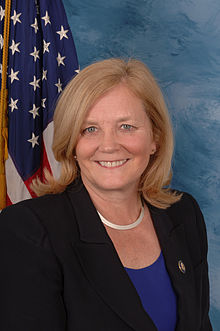
Dem. Chellie Pingree-Representative from Maine’s 1st District
Dem. Chellie Pingree-Representative from Maine’s 1st
District (Unit 4)
Representative Pingree has served in government since 1992 when she was first elected to the Maine Senate defeating a Republican incumbent. She was reelected in 1994 and 1996. She was forced to leave the State legislature in 2000 due to term limits.She first ran for House in 2008 with sponsorship from EMILY’s list, several labor organizations, and Congressman Rush D. Holt Jr. Some of her largest campaign contributors are the American Federation of teachers, Corning incorporated employees PAC, Machinists Non Partisan Political League, and Synergy PAC, all with $5,000 dollars worth of investments. Her district is the south of Maine, comprising areas such as Portland and Augusta, along with their outlying regions. In a state as sparse as Maine, those big cities are easily offset by the outlying territory, making it largely suburban. She has served consecutively since 2008, making 2016 her fifth term if she is reelected. She currently serves on the Committee of Appropriations, and has sponsored such bills as, the Food Recovery Act of 2015, the Asylum Seeker Work Authorization Act of 2015, and the Ruth Moore Act of 2015. She served in the Maine state legislator as Majority leader from 1996 to 2000. 
Bill 1: While she does not largely care about privacy issues, she is for protecting the consumer, so Representative Pingree would most likely vote for this bill. This bill is all about protecting the average consumer against big government and business, and she is incredibly for the protection of the little guy.

Bill 2: She would likely vote against this bill because she is pro labor union, an institution that would likely be hurt should air traffic control become privatized. This bill is against big government and for increased privatization which is against her particular stances.
Bill 3: Representative Pingree does not have much say in prison debates, but it is likely she would vote yes for this because she has voted bi-partisan in the past and cares about personal liberties for the average man, which this bill would help.

Tuesday, March 1, 2016
Unit 3: Sick Of Political Parties, Unaffiliated Voters Are Changing Politics
The article Sick Of Political Parties, Unaffiliated Voters Are Changing Politics talks about the growing movement towards waning affiliation in the United States political spectrum. Many voters in Colorado, the majority in fact, are now registered Independent as opposed to the other two major parties. 39% of American voters are registered as Independent, higher than both Democrats, at 32%, and Republican, at 23%. In Florida, 44% of Hispanics are now independents, compared to 34% registered Democrat and 13% registered Republican. This makes Florida an even more hotly contested swing state due to the huge number of independent voters throughout the state. Lastly, in Arizona, Independents are attempting to band together in order to protest the lack of ability to vote in primaries and caucuses, and the fact that Independents are looked at as seemingly second class citizens. 

The article pertains heavily to Unit 3 because a huge part of unit 3 is political parties. While not technically a political party, Independents play an enormous role in getting one of the two parties elected to the White House, and possibly destroying the two party system. The growing number of Independents is worrisome to both parties because they now have to impress not only their party, but also the steadily growing number of Independents. More and more, Independents are able to influence the way elections are swinging, something that is huge for the upcoming 2016 election. There is a huge party de-alignment within the younger voter base. Political parties are losing a great deal of traction with not only minority groups, but also the younger portion of the country to due a political disconnect. The future of the country is no longer in the hands of just the parties, but the ever increasing number of Independents. It will be interesting to see how this affects future elections, including the introduction of independent candidates.
Link to the Article: http://www.npr.org/2016/02/28/467961962/sick-of-political-parties-unaffiliated-voters-are-changing-politics
Subscribe to:
Posts (Atom)